Supported under the Civil Society Empowerment Grant Program, implemented by the Hrant Dink Foundation with financial support from the European Union, the 18-month project focuses on the provinces of Ağrı, Mardin, Şanlıurfa, and Van.
The project aims to improve access to justice for disadvantaged groups by strengthening the quality of legal support available to refugees and migrants seeking protection in Türkiye and enhancing capacity for rights-based advocacy. Activities will focus particularly on groups that may face additional barriers to accessing legal protection, including children, survivors of torture, and survivors of gender-based violence.
First Step: Visits to Bar Associations in Four Provinces
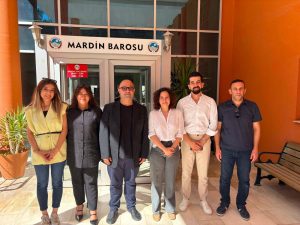
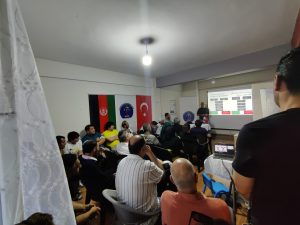
As part of the project’s initial activities, the RRT team visited the Van, Ağrı, Mardin, and Şanlıurfa Bar Associations in June and July.
During the meetings, discussions focused on the current migration and asylum context in each province, challenges faced by lawyers, barriers to access to justice for vulnerable refugees and migrants, and potential areas of cooperation with relevant bar association commissions. The meetings also marked an important first step toward ensuring that the project’s capacity-building activities are shaped by local needs and experiences.
What’s Next?
Throughout the project, a series of capacity-building and rights advocacy activities will be carried out in cooperation with lawyers, relevant bar association commissions—particularly those working on migration and asylum—and human rights defenders in the four provinces.
Self-learning modules focusing on the protection of children, survivors of torture, and survivors of gender-based violence will be developed. Two-day seminars for lawyers will be held in each of the four provinces, followed by more advanced specialized seminars. We will also facilitate ongoing knowledge and experience sharing with lawyers in the field on recent developments in legislation and case law.
At a later stage of the project, a workshop will bring together representatives from the four bar associations and other relevant stakeholders to discuss human rights monitoring and available redress mechanisms. A practical guide on these mechanisms will also be developed.
Through this project, Refugee Rights Türkiye aims to further strengthen its long-standing cooperation with bar associations and lawyers and contribute to improving access to qualified legal assistance and effective remedies for refugees and migrants in vulnerable situations.